People and Techniques: episode 4, Printing
Listen to the article
In this new episode of People and Techniques, we’ll be exploring printing, a technique that seems to start from a file, but actually begins at a much earlier stage: through the dialogue between the pattern and production departments, between the idea developed by the style offices and its concrete evolution on the material.
So far we’ve told you about three of our techniques. If you missed the previous episodes, you can find them here:
Embroidery and sewing
Hotfix technique
ABS Studs
From file to material: where printing really begins
Every project starts from a file, but the first step is not printing, but rather interpretation.
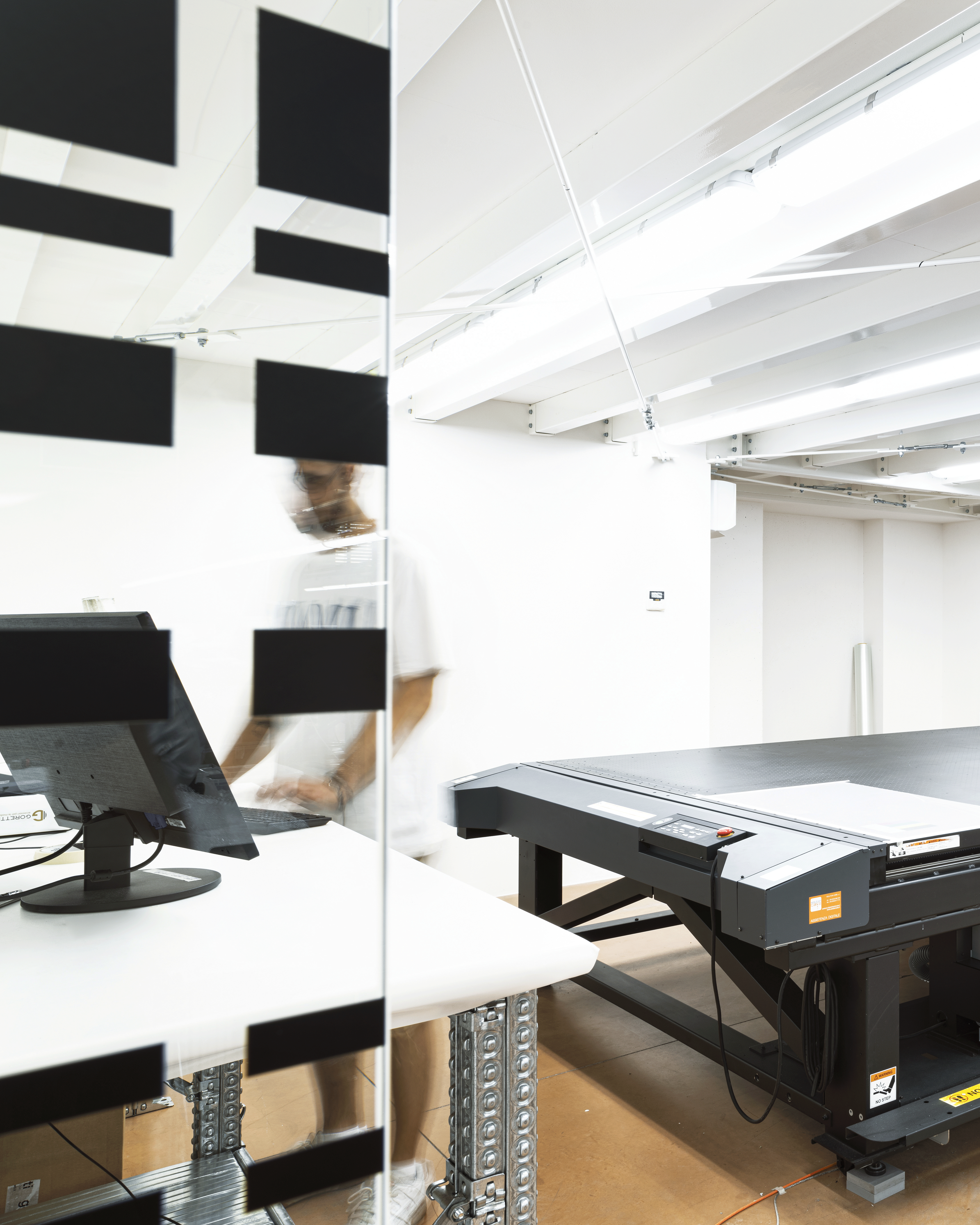
When graphic content arrives at the company, the pattern maker works on layers, colours and set-ups based on the final material. A colour does not behave in the same way on every support: natural, synthetic fabrics, leather and supports all absorb colours differently and create different prints, therefore requiring a specific interpretation.
Before starting the machine, there is a study process: colour tests, adapting the file to the machine’s technical characteristics, definition and resistance tests.
Only after this sampling process does production actually begin, where every parameter is carefully measured to obtain a consistent, stable result that is faithful to the original idea.
When the file enters the production phase
It’s in the production phase that the file truly starts to take shape.
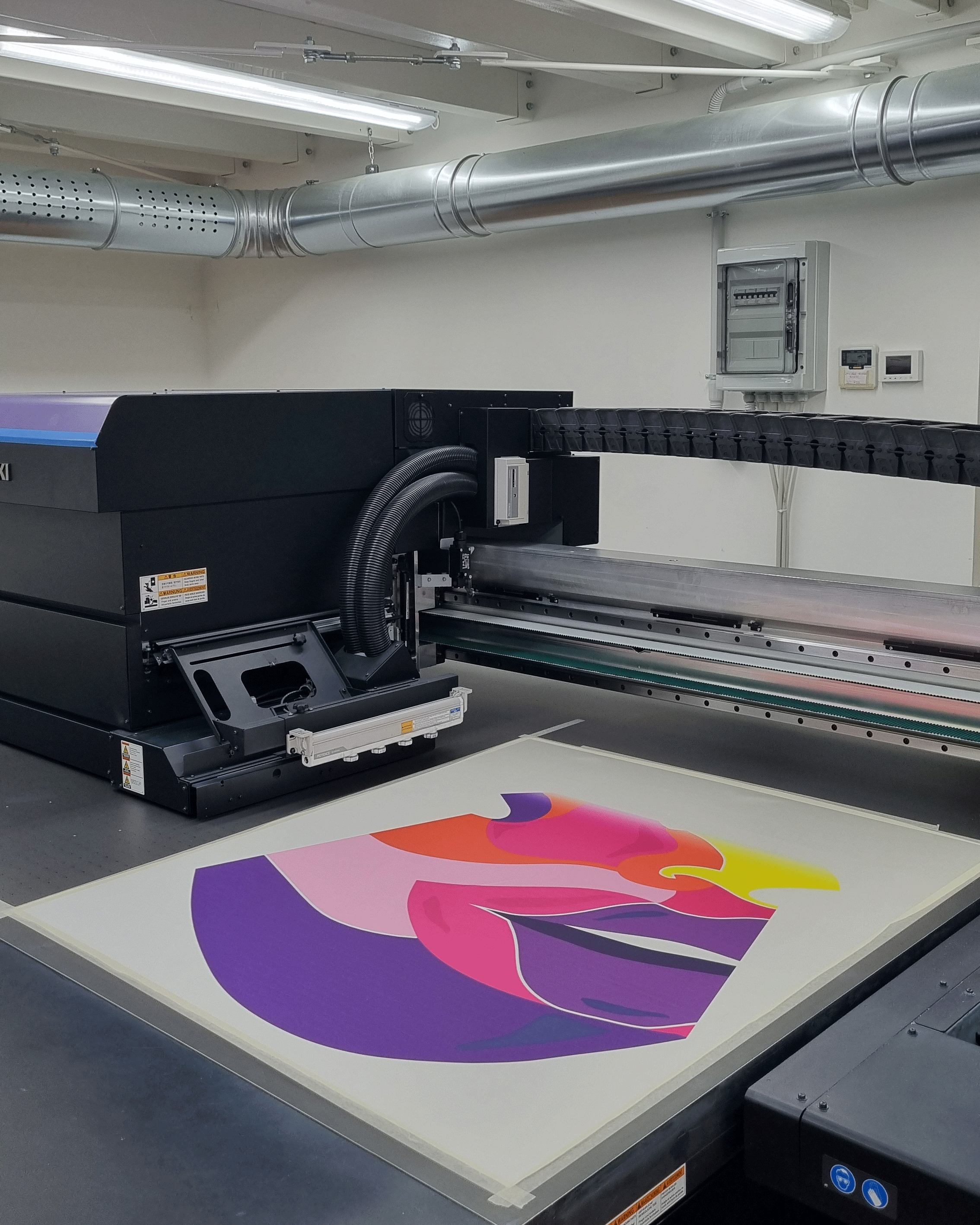
That’s when Alessia – our employee in charge of the printer – takes over: she analyses the project, adjusts the parameters based on the material and starts carrying out tests, checking the colour renderings, definition and fastness.
If the result is not what we were hoping for, we work on it again: we correct the file, adjust the values and test it again.
Printing is not an automatic process, but rather a constant dialogue between technical expertise and production skills, in which every detail contributes to the final quality of the product.
Matteo and Alessia: two perspectives, one result
Behind every print there are people, ideas being exchanged and skills coming together.
Matteo is a pattern maker and works every day on complex files, colour renderings and graphic optimisation. His task is to turn an idea into a file that is ready for the machine, readable and consistent with the final material. To him, the printing world combines two aspects that are rarely separated from one another: technical precision and visual imagination. The fascinating part of his work is being able to see a graphic intuition turn into a fabric, a surface and a tangible object.
Alessia, on the other hand, works at the machine. She oversees, adjusts, tests and initiates the process. She understands that even the smallest change can affect the final result. This very balance between attention and experience is what she finds most rewarding: seeing a perfect print and knowing how much work was necessary to make it.
There is one thing that is apparent in their stories: the dialogue between those who prepare the file and those who are in charge of the printing process is not a secondary part of the process, but rather its very core. Sometimes with differing opinions or approaches, but always with a shared goal: obtaining the best result possible.
Read the full interview to find out what they find fascinating about printing, how they describe their working relationship and what challenges they face every day to turn an idea into something precise, consistent and ready for their customer.
Two technologies and a conscious choice
At Goretti we have two complementary digital printers, each chosen based on the material and result the brand wishes to obtain.
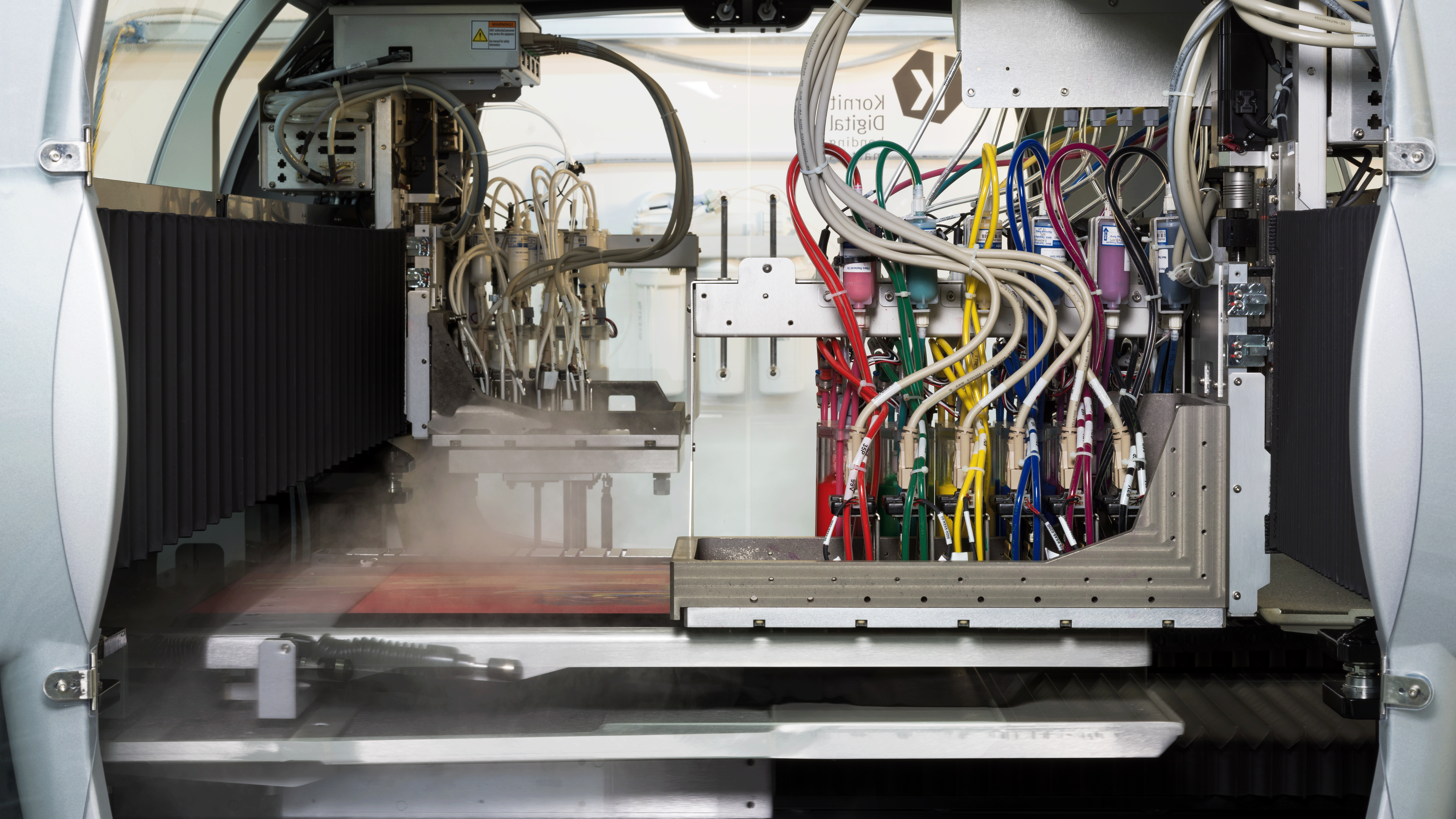
The Kornit Avalanche ECO HD6 is a sustainable solution, ideal for natural fibres. Thanks to its hexachrome printing, it offers a greater variety of shades and colour depths, with advanced colour renderings and special attention to the impact of the process.
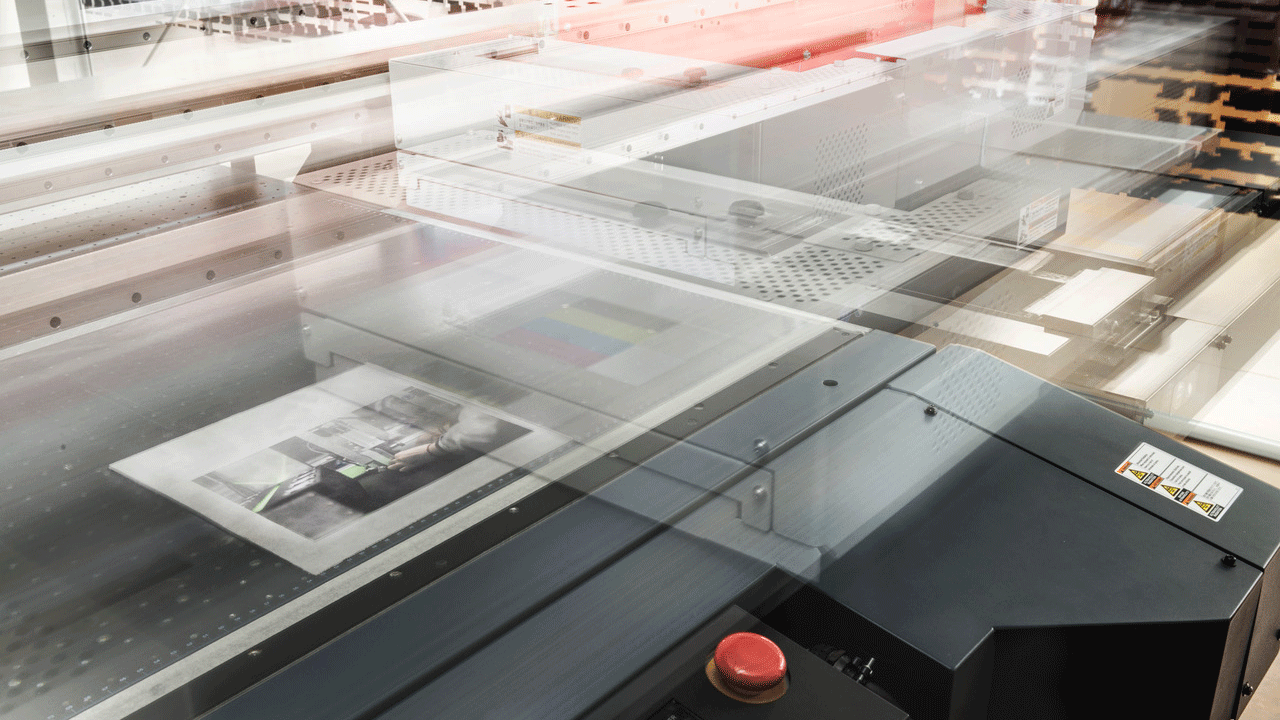
The Mimaki UV LED, on the other hand, stands out for its versatility. It is suitable for various materials and for more cross-cutting applications, as it offers high-level precision and greater creative freedom.
The difference goes beyond the machine itself. It’s about understanding the project, preparing the file, choosing the right support and being familiar with the basic materials. In other words, it’s about being able to choose the right technology to achieve the best result possible.
When printing meets other techniques
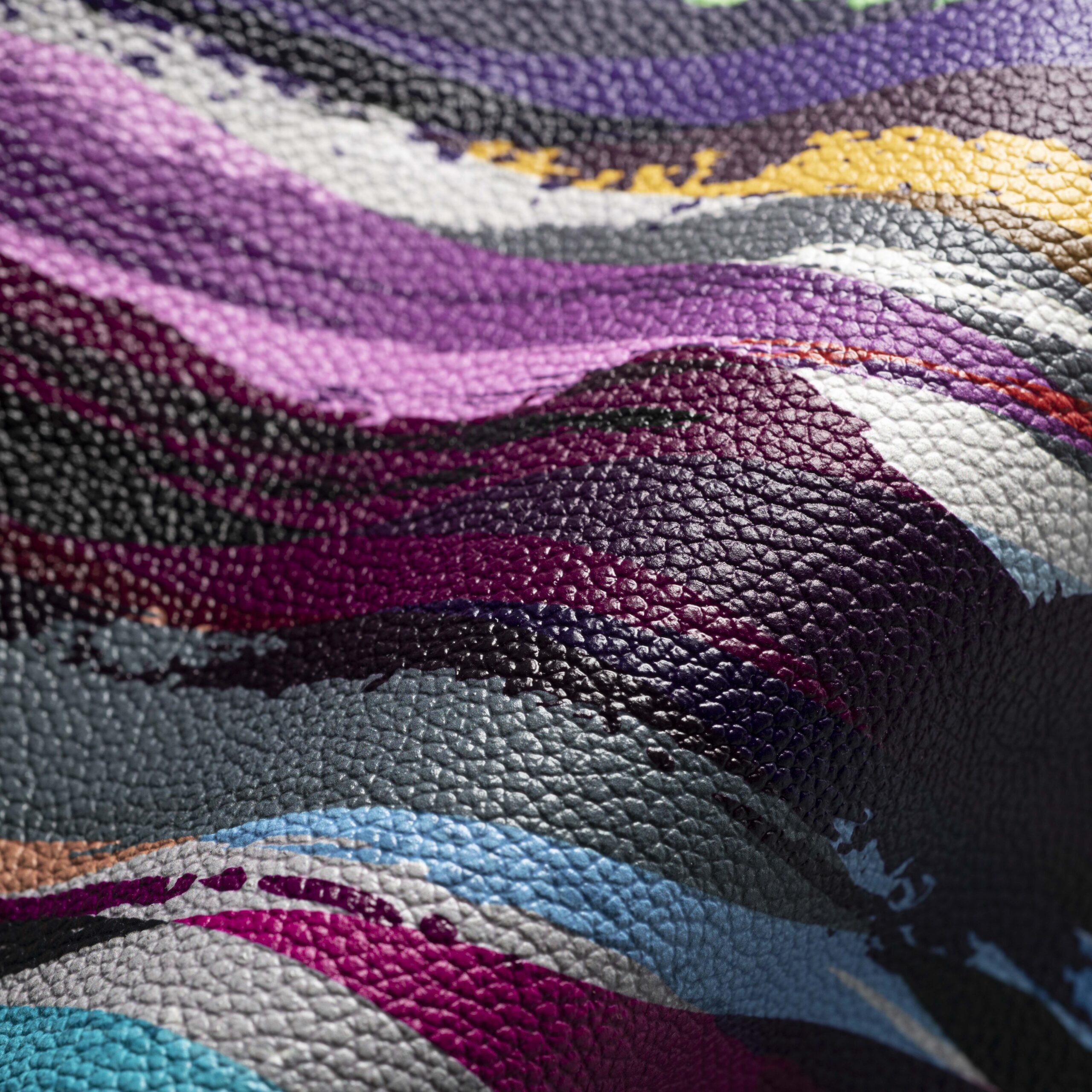
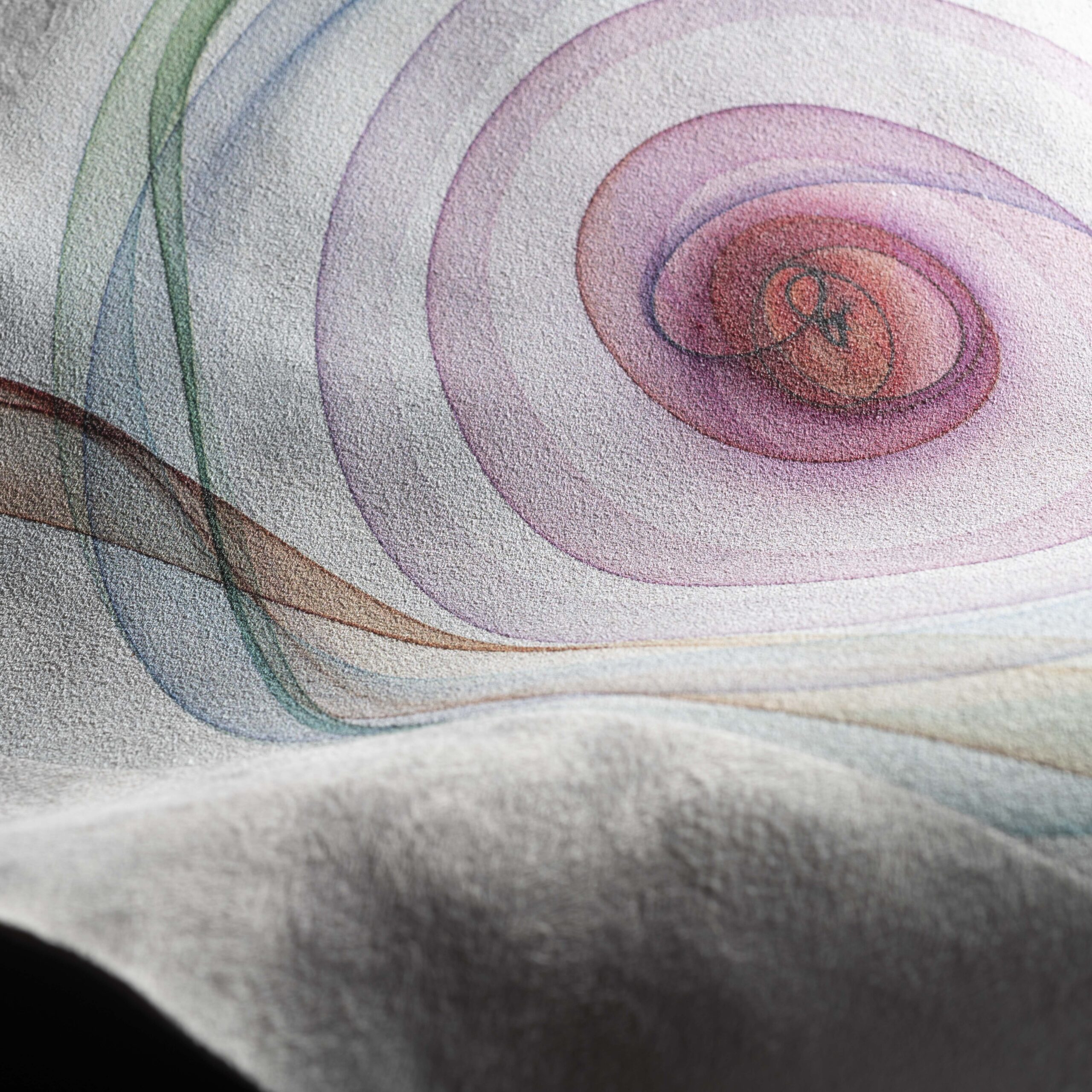
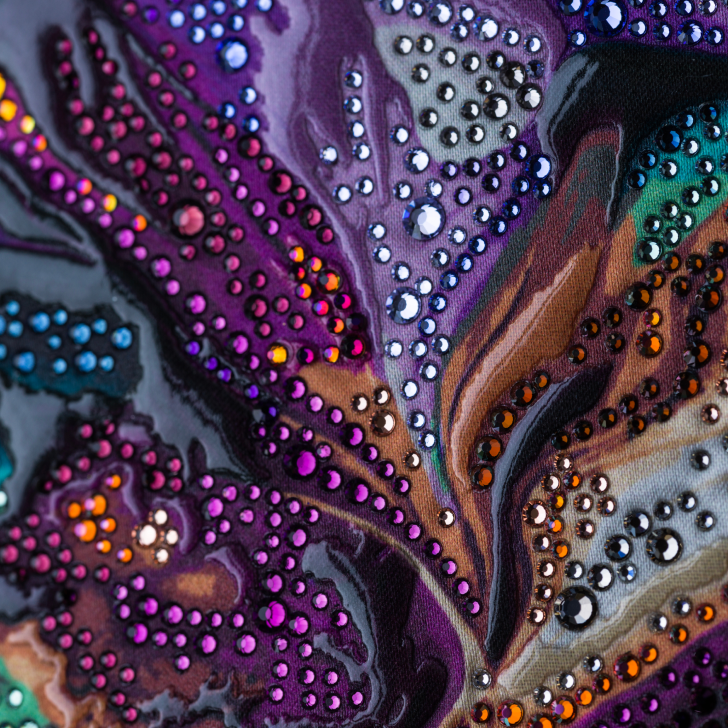
Printing is often not the end result, but rather the start of something more complex.
It can be combined with the hotfix technique, ABS studs, embroidery or metal applications, thus becoming a part of a more complex and multi-layered application. These combinations truly show the expressive potential of a technique: for the style office this means greater creative freedom, while for the product office it means control, consistency and reproducibility.
After all, that is our goal: turning an idea into tangible material without losing what makes it unique.